

IRR 2026 Outlook: Spotty Growth, Headwinds, and a Shift Toward Value Creation
The Biggest News: Growing Proof of Impact
Summary of 2025-2026 Trends
Susan Adams, Next Level Peformance
Rob Catalano, WorkTango
Rachel McInnis, Maritz
Click here to subscribe to RRN weekly, and here for an RRN media kit.
Facing a year of significant uncertainty, the incentive, rewards, and recognition field has experienced modest growth at best: the sales, channel engagement, and loyalty businesses have fared better. Current signs indicate continued softness on the employee recognition side, as some companies abandon programs to focus more on spot gifting platforms to express thanks and appreciation. Formal and informal interviews with senior management at multiple companies in the field indicate all are acutely aware of the need to focus on value creation.
The Biggest News: Growing Proof of Impact 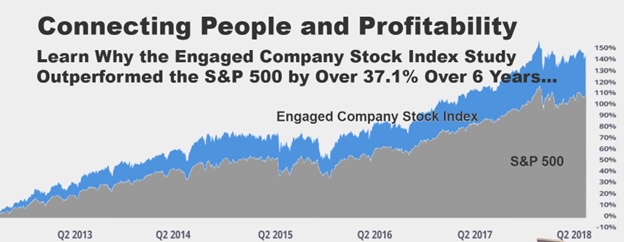
The big headline for the incentive, rewards, and recognition business: independently verified evidence is growing that having happy, engaged, recognized and appreciated employees provides a measurable performance advantage: enhanced future equity creation, higher company valuation, and higher stock prices. While the Incentive Research Foundation, Gallup, Deloitte and others have produced research on the impact of engagement on performance, none have come as close to these in creating evidence that investors, boards, and senior management must consider:
· A method for predicting the future equity value of an organization based on its management of people, known as the Human Capital Factor, has been verified for the sixth year in a row by the analytics department of J.P. Morgan. The HAPI ETF based on those principles has outperformed the S&P 500 by an average of 4% a year since its inception.
· A new working paper—Workplace Wellbeing and Firm Performance” (Oxford Wellbeing Research Centre, Working Paper 2304)—concludes that companies where employees report being happier, more purposeful, more satisfied, and less stressed perform significantly better on virtually every financial measure studied..
· The JUST Capital ETF large cap fund, managed by Goldman Sachs, based on companies with high levels of customer, employee, and community engagement, has returned 14% annually since its inception in 2018 at least as well if not better than the S&P 500 depending on how dividends are calculated.
Note that the Enterprise Engagement Alliance in 2012 was among the first to identify this connection between engaged stakeholders, with the Engaged Company Stock Index managed by McBassi Inc. based on large cap equities with high levels of customer, employee, and community engagement. Over the six years of this longitudinal study, sponsored by EGR International, the fund outperformed the S&P 500 by almost 38%.
These studies differ from almost all other industry research in that they indicate a clear financial benefit of high relevance to boards, CEOs and investors and that they come from organizations with no financial interest in the use of human resources practices, including incentives, rewards, and recognition.
Summary of 2025-2026 Market Trends
Across leading IRR providers—from experience-focused incentive firms to data-driven employee experience platforms—there’s a sense that 2025 marks a turning point. Growth is continuing but stabilizing, and there are signs that organizations are shifting from transactional rewards to more integrated, outcome-based systems that tie recognition, performance, and employee sentiment directly to business results. The hottest category might be the online gifting startups that focus only on reward delivery for big companies questioning the value of recognition programs or using their own technology platforms to manage it. Also stronger are sales, channel, and loyalty programs.
According to those incentive and recognition companies interviewed or who contributed insights below, the biggest opportunities lie in platform integration, predictive analytics, and driving measurable ROI. The greatest risks: economic uncertainty, privacy concerns, and the inability to prove business impact. In short, some think that 2025 is the year IRR programs began the transformation from perks to strategic performance imperatives.
As of now, prospects for the IRR field in general are for steady overall growth with opportunities at companies seeking a more strategic approach to people management tempered by continued economic uncertainty. The rapid post-pandemic surge has normalized. There is hope for a resumption of growth on the employee engagement side as companies absorb the growing increasingly view IRR as critical business infrastructure rather than discretionary spending. Tariffs, inflation, supply chain volatility, and AI-driven disruption continue to create headwinds, prompting organizations to prioritize programs that clearly demonstrate ROI.
Those interviewed generally agree that a major driver of growth is the shift from simple rewards to outcomes-based strategy. Companies are using IRR to align employees and channel partners with measurable business goals—improving retention, productivity, and partner loyalty. All three firms point to consolidation and integration as essential, with clients seeking platforms that connect feedback, performance, recognition, and incentives into a unified system. Leadership now expects quantifiable impact from IRR investments.
In terms of program types, sales and channel engagement appear to be the most resilient, as companies feel they can more easily measure and justify the results. Employee recognition has faced headwinds as many companies question the impact and have stalled major new initiatives. A lack of clear impact metrics remain a weakness.
.
Customers in 2025 increasingly want integrated, insight-driven platforms, culturally aligned program design, and recognition that resonates across a multigenerational workforce. Major risks include economic volatility, privacy concerns around AI, the need to prove ROI, and continued fragmentation. The biggest opportunities lie in combining technology, analytics, and human behavior to make recognition an everyday, measurable driver of performance.
Experiences, digital rewards, and flexible choice are dominating award trends, while physical merchandise faces challenges from tariffs and pricing volatility,
 with merchandise redemptions largely mirroring consumer trends now that most catalogs have access to current products. For instance, Adrienne Forrest, Senior Vice President and Heather Chevreau at Citizen Watch Corp. report robust sales in line with the popularity of watches increasingly worn as a form of jewelry, rather than only for time keeping. Similarly, Ryan DeGrand, Principal of ProAm Golf, St. Louis, reports that his company’s IRR sales are up in line with the slower growth in the overall golf market, after a surge during the pandemic. This indicates the continued popularity of merchandise when properly curated for the audience.
 Motivational events continue to motivate but face closer scrutiny during economic uncertainty.
Across reward categories, the strongest growth is in experiential rewards—from travel to curated local experiences and experiential gift cards. Flexibility, choice, and digital rewards are also rising as companies seek options that avoid tariff volatility and provide instant, personalized value. Physical merchandise is declining due to pricing instability, logistics challenges, and lower perceived impact. X
Susan Adams of Next Level Performance; Rob Catalano of WorkTango, and Rachel McInnis of Maritz took extra time to provide detailed reports.
Susan Adams, Vice President, Client Strategies and Engagement, NextLevel Performance
With clients across multiple industries, each facing unique marketplace challenges, one thing remains constant: Organizations must connect people and
 company goals to achieve results.
 A connection to performance. Unlike other times of uncertainty, it is now clear that successful companies understand that incentives, recognition, and rewards are effective, strategic tools to engage with employees, channel partners, and customers. While in the past, these programs may have been cast as “nice to have,” they are now an integral part of organizational strategy to drive performance and revenue.
We see growth in both channel and employee sales incentives, and an uptick in interest in employee recognition and engagement. This aligns with the 2025 IRF Top Performer Study which shows the most successful organizations are more likely to take a holistic approach to their incentive and reward qualifications, outpacing other companies across financial, customer relationship, and activity metrics. By increasing focus on outcomes and the behaviors needed to achieve them, they keep everyone on track. When there are headwinds, these organizations know where to turn to outperform their competitors.
While some client organizations may be facing challenges, they appear to be turning to their programs to help them achieve goals.
Travel trends. Some clients have adapted their travel program size or inclusions to continue to keep their budgets flat despite recent inflationary pressures, but there is also an increase in interest in far-flung destinations that provide deeply memorable experiences and a high degree of motivational power. Clients are focused on delivering the most impactful programs possible, driving towards significant return on investment. DMCs and event gifting companies are proceeding cautiously with committing to pricing into 2026, as they wait to see how tariffs may play out.
Points programs are especially well-positioned to insulate client organizations and participants from tariffs or other market forces. With set per point prices, variables occur on the rewards mall side. Our Global Rewards Marketplace offers more than 100,000 rewards. If one item is subject to cost changes that affect the number of points needed, a robust rewards mall offers a wide range of other options that will be meaningful and desirable to the individual participant, while delivering great value.
Enhanced collaboration. Our industry is truly driven by relationships and partnerships. Since the pandemic, we have experienced even greater collaboration with our clients, working side-by-side to help them achieve their goals and inspire their audiences. We appreciate the faith they put in us to understand their unique organizational cultures and goals, and we – in turn – draw together a team of strategic vendor partners to bring the client’s vision to life.
Technology continues to have a major impact on our industry and our programs. Our market is striving to balance adoption of AI with increasingly important data security controls, while also taking advantage of the efficiencies available to us and our program participants.
Economic uncertainty is always a risk, but by crafting programs that are rooted in best practices, balanced between reward types, and drive to the bottom line, our industry has an important role to play in the success and stability of our clients’ organizations in any market conditions.
Rob Catalano, WorkTango
In my view, the market for IRR is splitting decisively into two lanes: those driving strategic growth and those facing contraction.

The Growth Lane: Integrated Experience Platforms. These are the strategic platforms that successfully fuse Voice of the Employee (VoE) data (i.e. from surveys and pulses) directly with action (recognition, rewards, performance). This integration shifts IRR spend from being viewed merely as a reward cost to a measurable investment in retention and productivity, which fuels new budget allocation.
The Headwind Lane: Transactional Point Solutions. Solutions limited to standalone merchandise fulfillment or single-metric surveys will stagnate. Buyers are aggressively demanding consolidation to simplify vendor sprawl and unlock crucial data synergy. If your offering doesn't connect why an employee is recognized with how they perform, I think greater headwinds are in your future
I believe these lanes clearly establish the dynamic in the market (integrated strategy versus siloed transaction) which positions a platform like WorkTango favorably which has been a product of our strategic direction over the past five years. These comments, however, are a response to what is happening in the market:
· Business accountability - post-pandemic turbulence has solidified that Employee Experience (EX) is business performance. CEOs are asking for clear linkage between EX spending and metrics like attrition reduction and discretionary effort. Purely transactional reward programs lack this linkage; integrated platforms provide it.
· Tech stack consolidation - after years of acquiring point solutions, IT and HR leaders are aggressively pruning their tech stack. If a platform can’t demonstrate it touches culture, engagement, and performance, it’s on the chopping block or deprioritized for renewal.
In my opinion, the market's strength is its proven necessity; its weakness is its historical fragmentation.
Strength: Recognition remains the most democratized and scalable tool for reinforcing company values in real-time. The strength lies in programs that facilitate peer-to-peer rewards and sharing, which builds social capital far better than top-down mandates.
Weakness: Incentive/channel programs often live in a separate silo, making it hard to connect sales SPIFFs back to core cultural performance metrics. Furthermore, pure event planning is seen as a discretionary spend, whereas integrated recognition is becoming operational infrastructure.
Rewards. As for trends favoring award categories, the clear trend is toward flexibility and velocity. We are seeing a strong preference for awards that offer the fastest, most personalized redemption:
· Digital experiences and choice platforms - Awards that allow the employee to choose their ideal reward (from a curated menu of travel, gift cards, or unique local experiences) win every time. This maximizes perceived value.
· Monetary Recognition. This is increasingly popular, especially as spot bonuses tied directly to a values-based recognition moment. This provides tangible impact while reinforcing culture.
· Merchandise. This is fading, except for longevity/milestone awards. The logistical complexity (tariffs, shipping, inventory) and lower personalization rate make it less appealing for day-to-day motivation.
As for tariffs and economic factors, these factors are accelerating the move to digital. Tariffs, inflation, and supply chain volatility have created unpredictable costs and fulfillment delays for physical merchandise catalogs. This has made digital, localized reward fulfillment a non-negotiable requirement for global IRR providers. It pressures vendors to simplify the supply chain, which inherently favors platforms with extensive global digital reward networks.
Customers are demanding that IRR platforms move from being a cost center to a profit driver. Without an established ROI, it’s hard to build the business case.
Major opportunity: The Intelligent Feedback-to-Action Loop. The biggest shift is the demand for predictive, prescriptive insights. Customers want their platform to answer: "If our 'growth and development' sentiment score is dipping in the engineering department, what specific recognition behaviors should Engineering managers increase this month to counteract that risk?" The opportunity is linking the listen (Voice of Employee) layer to the act (IRR) layer, turning recognition into a strategic lever for skill development and retention.
As for new companies making an impact, impact is less about new startups and more about platform consolidation:
· HR tech titans - Large HRIS/talent suites are pressuring the market by building out native or acquired recognition/feedback tools. They force specialized vendors to either integrate deeply or focus exclusively on niche, high-value automation.
· Niche AI analytics - Very focused tools using generative AI to analyze unstructured data (from open-text feedback or Slack/Teams) to derive immediate, prescriptive management coaching are making waves, often serving as acquisition targets for broader platforms.
As for major risks:
· The trust deficit - This is the single biggest risk. If predictive analytics like flight risk scoring is perceived as surveillance rather than coaching, it will backfire immediately, causing employees to withhold honest feedback and interact with recognition systems differently. Transparency in data usage is paramount.
· Justifying budget in lean times: When budgets tighten, every dollar must show clear, quantifiable ROI. Programs that are easily dismissed as "fluffy perks" will be cut first. The risk lies with vendors who cannot prove how their platform directly reduced regrettable attrition or increased productivity metrics.
If you’re looking for more data on ROI from these platforms, take a look at recent research conducted from over 1,000 human resources leaders.
The key urgency for HR in 2025 is operationalizing appreciation. The mandate is now the integrated experience: the tech that transforms connection and recognition into a consistent, data-driven element of the daily routine. Recognition isn't just a nice-to-have; it's a leading performance indicator ready to be leveraged.
Rachel McInnis, Vice President, Solution Strategy, Maritz
We've seen a lot of growth in the past several years due to the post-pandemic rebound. While that rate of growth isn't sustainable over the long term, we
 feel optimistic going into 2026. We expect modest growth, in line with the overall pace of inflation. Tailwinds are that the US economy has outperformed expectations, the Fed may continue to ease interest rates, and trade tensions have lessened compared to the first half of 2025. There are still headwinds, to be sure. The corporate environment is cautious around discretionary spend due to uncertainty around tariffs, AI, and other factors.
 Areas of growth. We see strength in channel incentives in particular, as many companies are shifting the way they use these programs from an expensive cost of doing business to a lever to build loyalty with their partners. With that shift comes new challenges for program owners in terms of measurement of impact and ensuring the programs are designed with the flexibility that a complex partner ecosystem may need.
Reward trends. When it comes to rewards, what people are redeeming points for, the greatest growth we see is in experiences. In fact when we look at other categories, that experiential element proves strong as well. For example, gift cards consistently remain a strong reward category, and when you really explore which gift cards are growing the most for us, it’s the ones that are used to create experiences. For example, rather than redeeming for golf sporting goods, we see redemption for Top Golf. Similarly, travel experiences remain a favorite for recognizing and rewarding top performers and top producers. We have seen that even as the cost of luxury travel has increased, companies remain committed as they (and their qualifiers) see travel as highly motivating.
Tariff impacts. To date, we are seeing an incredible amount of volatility in merchandise pricing – as you might imagine, the number of price changes year-over-year has multiplied significantly. We still see healthy redemption rates in points-based programs, but just as our dollars aren’t going as far, the value of points are being diluted. The challenge becomes one of curation and providing high-value, meaningful options for program participants, so at the time of redemption they feel rewarded and celebrated.
From a merchandise perspective, the AI trend is in full force. AI is being built into everything, and for participants, it’s a mark of innovation and modernity. It’s in all the smart home products you’d expect, but also in surprising (and surprisingly fun) places like bird feeders and bird houses that photograph and identify the birds visiting your yard. We also see desire for bucket list travel experiences that go beyond your standard awards dinner and tours. Participants want unique and authentic experiences they couldn't do on their own, whether it's exploring a unique, off-the-beaten-path destination or experiencing a familiar one in a new way.
With new generations coming into the workforce, there's an exciting opportunity to look at how up-and-coming generations prefer to be recognized and rewarded. By 2030, 75% will be comprised of Millennials and Gen Z. This has broad implications for how we engage, communicate, recognize and reward as we must engage a multi-generational workforce.
Enterprise Engagement Alliance Services
Celebrating our 15th year, the Enterprise Engagement Alliance helps organizations enhance performance through:
1. Information and marketing opportunities on stakeholder management and total rewards:
ESM Weekly on stakeholder management since 2009; click here for a media kit.
RRN Weekly on total rewards since 1996; click here for a EEA YouTube channel on enterprise engagement, human capital, and total rewards insights and how-to information since 2020.
2. Learning: Purpose Leadership and Stakeholder
 Management Academy to enhance future equity value and performance for your organization.
3. Books on implementation: Enterprise Engagement for CEOs and Enterprise Engagement: The Roadmap.
4. Advisory services and research: Strategic guidance, learning and certification on stakeholder management, measurement, metrics, and corporate sustainability reporting.
5. Permission-based targeted business development to identify and build relationships with the people most likely to buy.
6. Public speaking and meeting facilitation on stakeholder management. The world’s leading speakers on all aspects of stakeholder management across the enterprise.